

Fado is heard in taverns, small eating houses and social clubs. In a Fado house it is treated with ceremony, which comes with rules.
The rules of a Fado house
There is no amplification. Nobody serves at the tables while someone is singing, the lights come down, and nobody walks about the room or interrupts. The artists take turns. For the audience, that means silence, a phone on mute and applause only at the end of each Fado.
The oldest Fado house in Porto
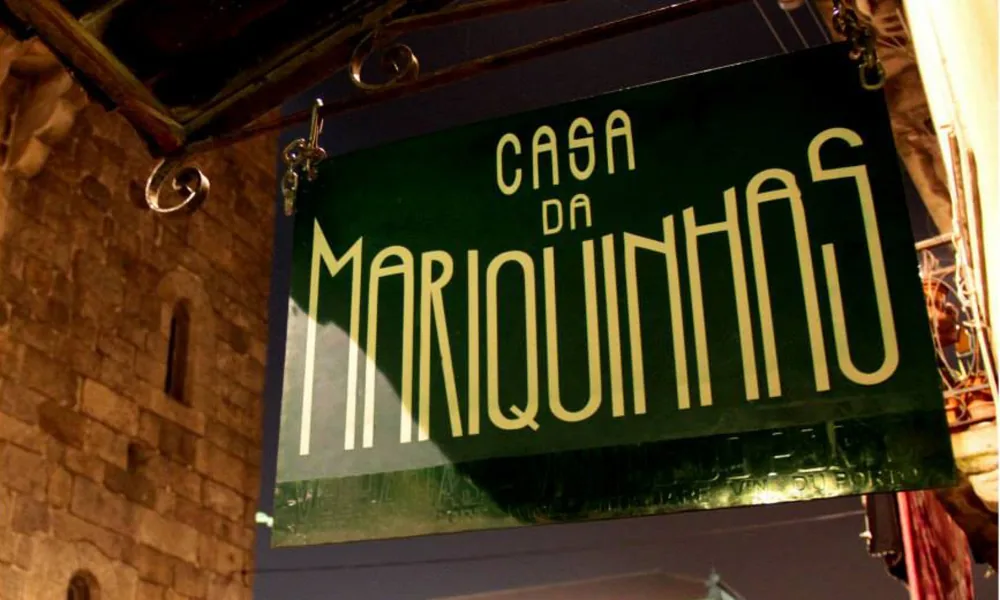
Heitor Gil de Vilhena opened Casa da Mariquinhas in 1968, in the Sé quarter at the foot of the cathedral, facing the Arco de Santana that the writer Almeida Garrett made famous. The city council lists it as an Establishment of Historical and Cultural Interest, the only Fado house in Porto with that status. The room is small and built of granite, and with no microphone the audience sits close enough to hear the singer breathe between verses.
Fado singers from Porto
Maria da Fé and Beatriz da Conceição, both from Porto, made their names in Lisbon’s Fado houses in the 1960s. Maria da Fé arrived at the Tipóia as a girl and in 1975 opened her own house, Sr. Vinho, which went on to train generations of singers. Beatriz da Conceição never had a house of her own. She sang in several, and was known for the intensity she gave the words.
Among the guitarists, Fontes Rocha was born in Porto in 1926.