

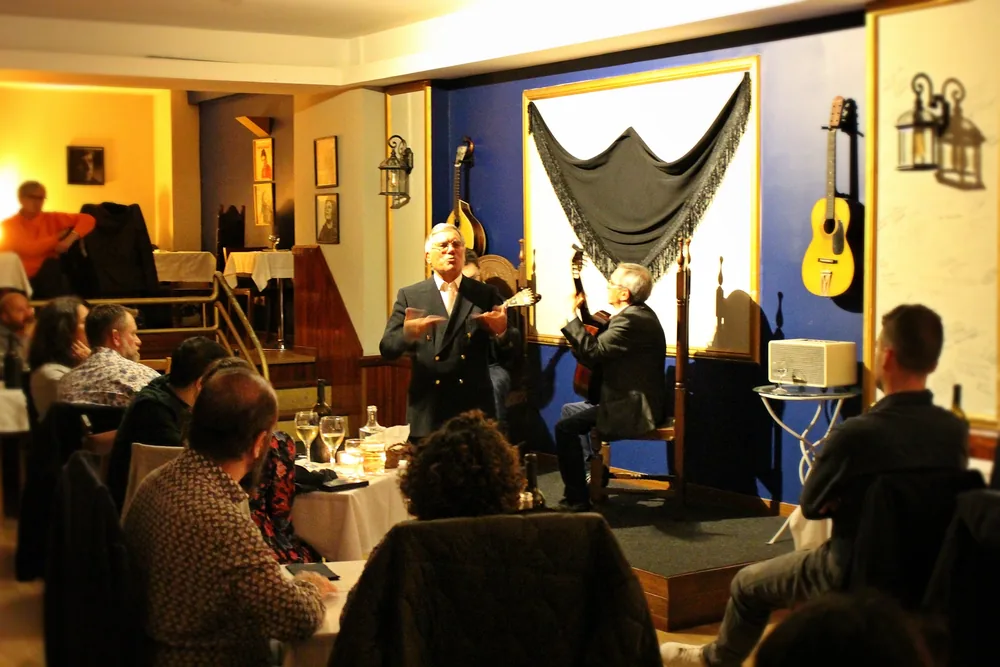
Lisbon City Council and the Fado Museum launched the bid in June 2010, with Mariza and Carlos do Carmo as its ambassadors. UNESCO’s Intergovernmental Committee approved it in November 2011, at its sixth session, held in Nusa Dua on the Indonesian island of Bali, and Fado went onto the Representative List of the Intangible Cultural Heritage of Humanity.
What the UNESCO listing covers
What UNESCO lists is a living practice and the community that keeps it, which for Fado means the Fado houses, the singers, the guitarists, the poets and the people who listen. In the Fado houses, that practice comes with rules: silence while someone sings, and applause only at the end of each Fado.